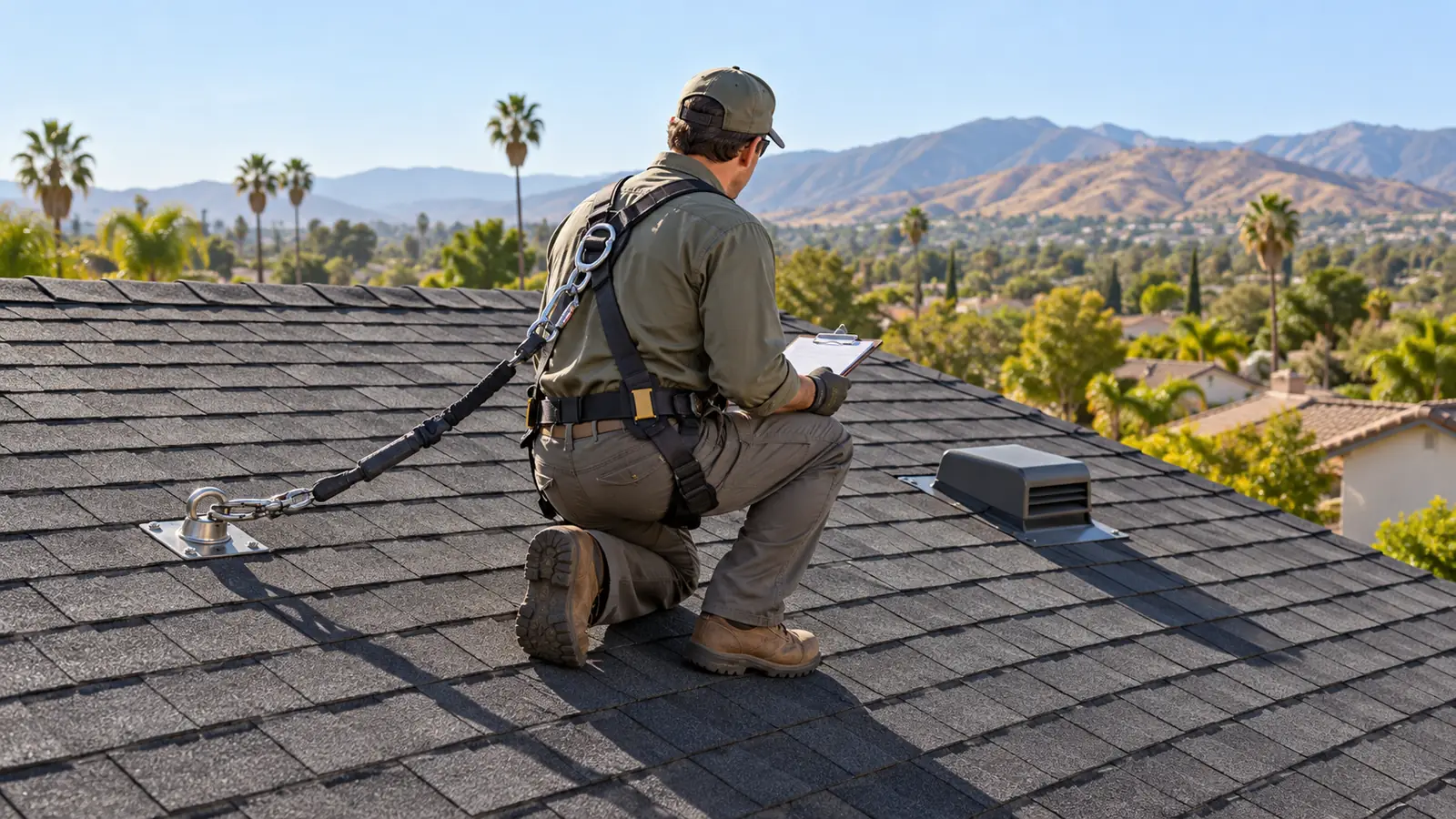

Make safety the first decision
Stay away from fallen wires, unstable branches, loose roofing, and ceilings that appear to sag. Keep children and pets away from damaged areas. If there is an immediate danger, contact emergency services or the relevant utility rather than attempting a roof inspection yourself.
Do not climb a ladder or step onto wet roofing to check the damage. Document what you can see from the ground or a safe indoor location. A few clear photos and a description of active water entry are more useful than taking a risk to reach the roof.
Record what changed after the weather
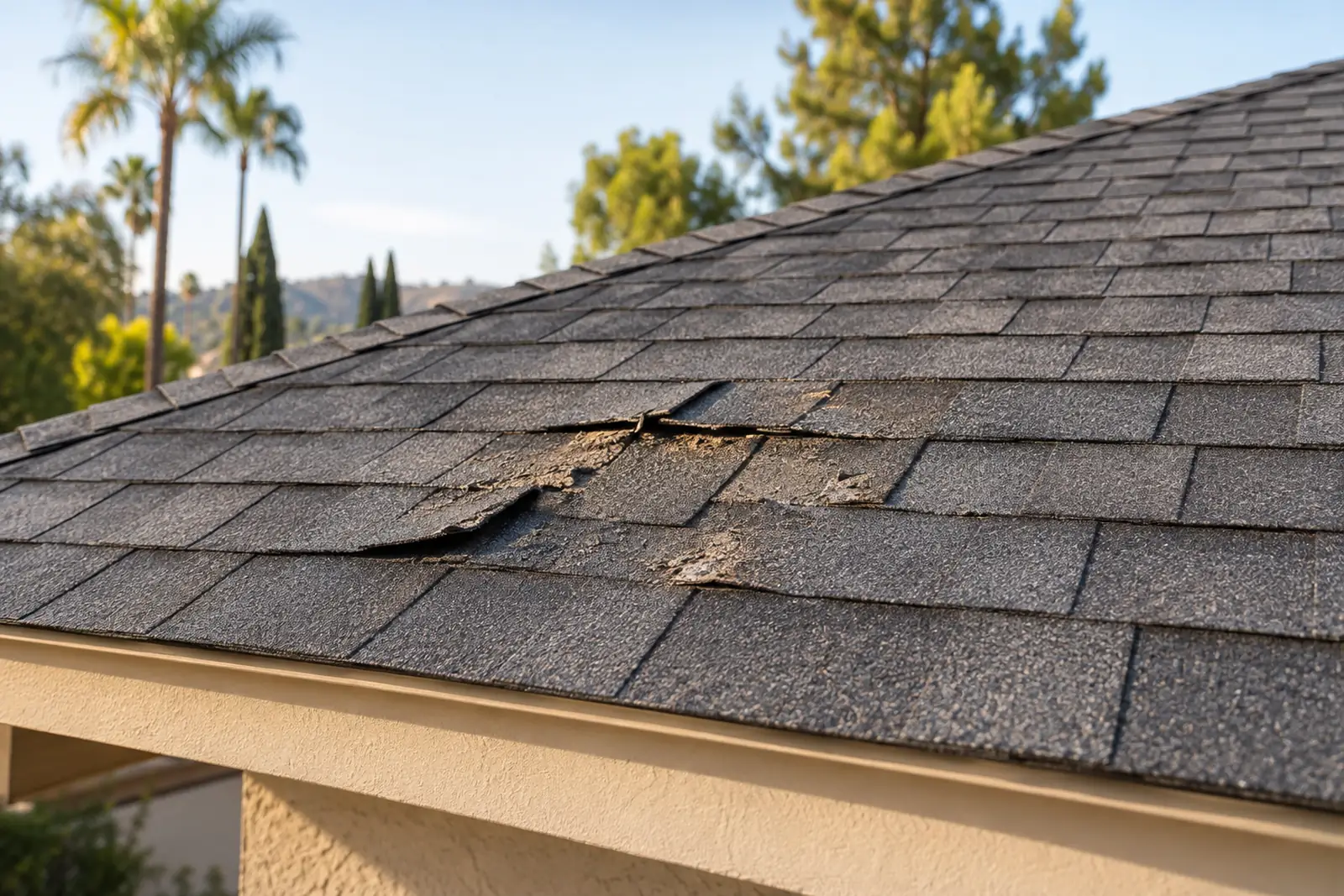
Write down the date you first noticed the problem and what you observed. Save ground-level photos of displaced material, visible debris, or new interior stains. If you have older photos showing the roof before the event, keep those with your records.
An inspection may distinguish recent visible damage from older deterioration, but not every condition can be dated from appearance alone. Ask for a factual description of findings. Avoid assuming that every issue discovered after a storm was caused by that storm.
Separate temporary protection from the repair
Temporary protection may be discussed while permanent work is being planned. Confirm what is included, what areas remain exposed, and what follow-up is needed. Current availability and site conditions will determine what can be arranged; do not assume a website inquiry has scheduled an emergency visit.
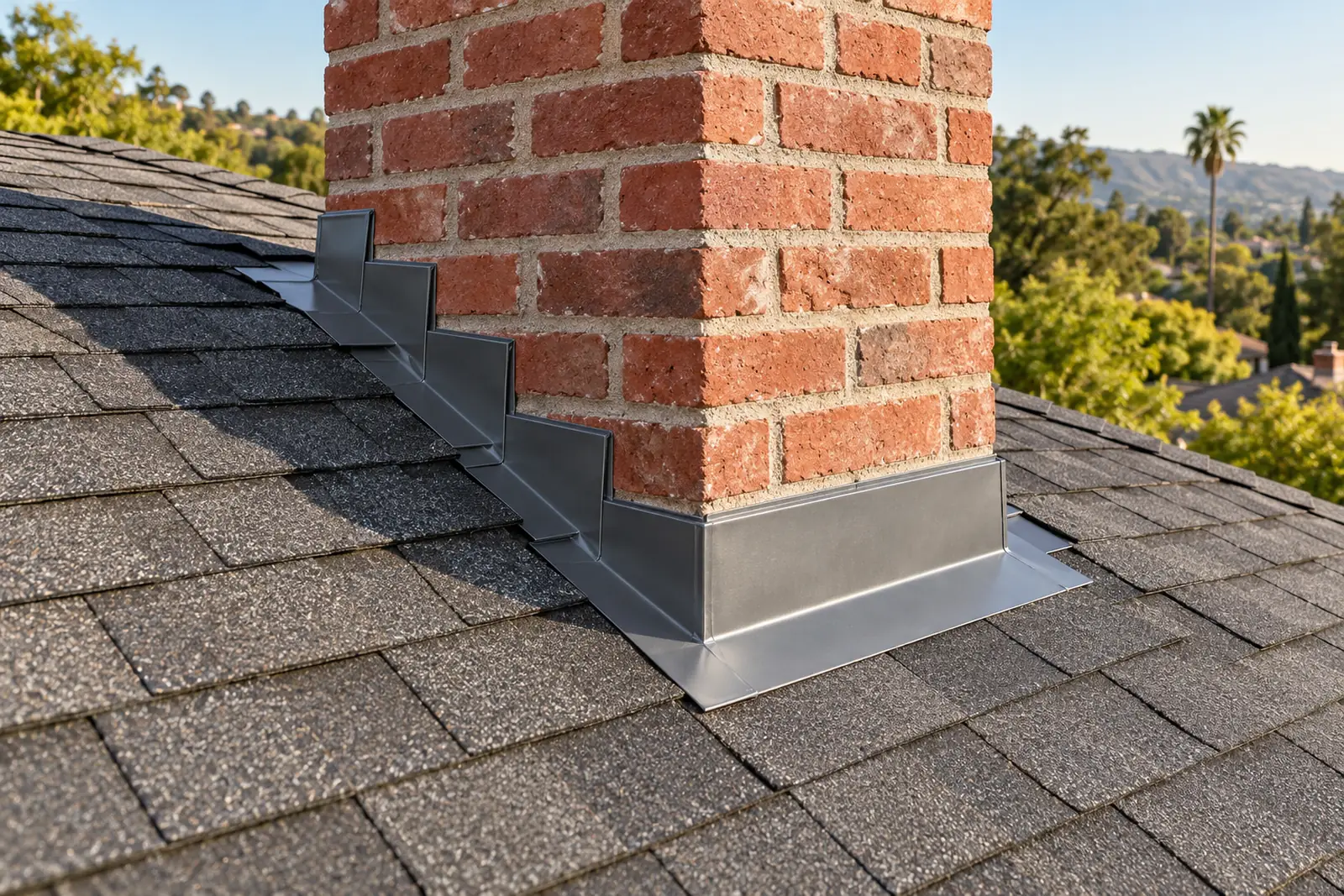
A permanent proposal should explain the affected roof sections and the components to be repaired or replaced. Ask whether nearby flashing, underlayment, or decking needs attention. If the extent is concealed, discuss how additional findings will be documented and approved.
Make the repair decision from the findings
Localized damage may support a defined repair. Wider deterioration, several affected areas, or limited material availability may lead to a replacement discussion. Ask for the reasoning behind each option and compare the work that each estimate actually includes.
If you plan to contact your insurer, retain photos, estimates, and invoices and ask the insurer about its process. Coverage and claim decisions belong to the insurer and the policy; a roof estimate is not a coverage promise. Focus the roofing conversation on condition, scope, and safe repair planning.
- Explain whether water is entering now.
- Record the event and the visible changes.
- Keep temporary and permanent scopes separate.
- Review any change in repair scope before authorizing it.
STRAIGHT ANSWERS
A few things you may be wondering.
Does storm damage always require a new roof?
No. The type and extent of damage, surrounding condition, and material availability determine whether repair or replacement is appropriate.
Does submitting the form book an emergency appointment?
No. It sends an inquiry. Contact the business to discuss current availability, and use emergency services for immediate hazards.